

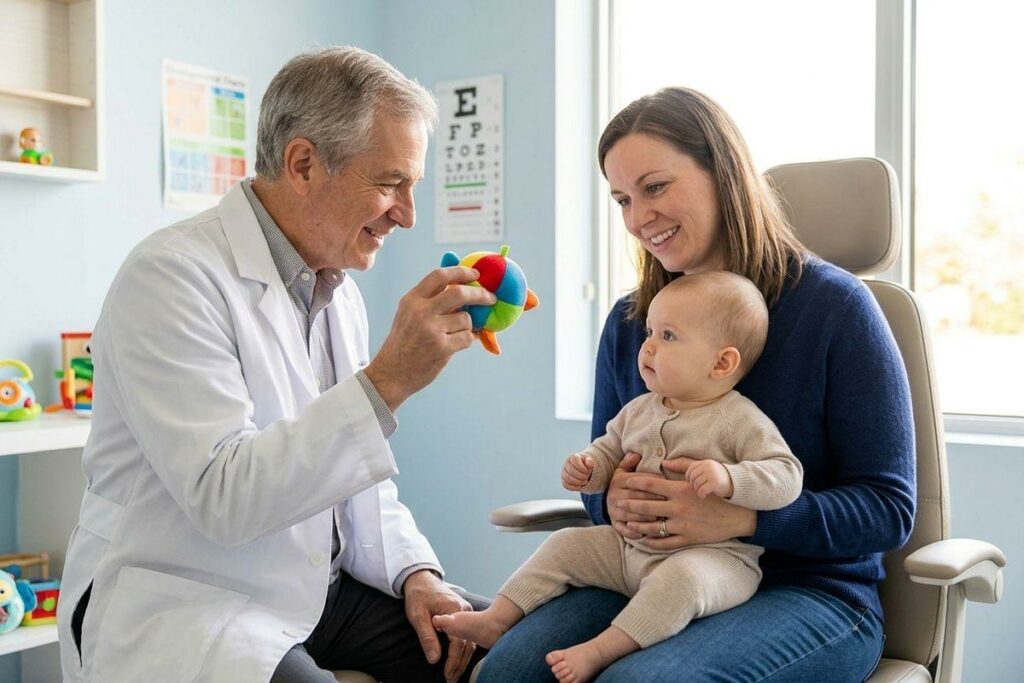
Your child’s vision keeps developing for years after birth, and much of that growth happens before they can tell you what they see. Since babies and toddlers can’t read an eye chart, many parents aren’t sure when to start booking exams. Your child should have their first eye exam between 6 and 9 months old, at least 1 more between ages 2 and 5, and then an exam every year from age 6 to 19.
Our children’s eye exams are gentle, and your little one won’t need to know their letters to answer. We use pictures and toys to see how their eyes work.
Recommended Ages for Your Child’s Eye Exams
Your child’s needs change as they grow, so the timing of each exam depends on their age.
Your Baby’s First Eye Exam: 6 to 9 Months
Book your baby’s first eye exam between 6 and 9 months old. At this age, your optometrist can look for crossed eyes, focusing problems, and early signs of eye disease.
This visit also gives your optometrist a baseline they can compare against at every exam that follows.
Eye Exams for Preschoolers: Ages 2 to 5
Plan for at least 1 eye exam during these years. Your child is learning colours and letters, and an exam can show you how clearly they see while they do it.
If they’re starting kindergarten, book the summer before so you know where their vision stands on the first day.
Eye Exams for School-Age Kids: Ages 6 to 19
Once school starts, book an eye exam every year. OHIP covers a yearly eye exam for children up to age 19, so cost doesn’t need to delay a visit.
Growing eyes can change from 1 year to the next. A child who read the whiteboard easily in grade 3 may start squinting at it in grade 4.
Why Early Eye Exams Matter for Kids
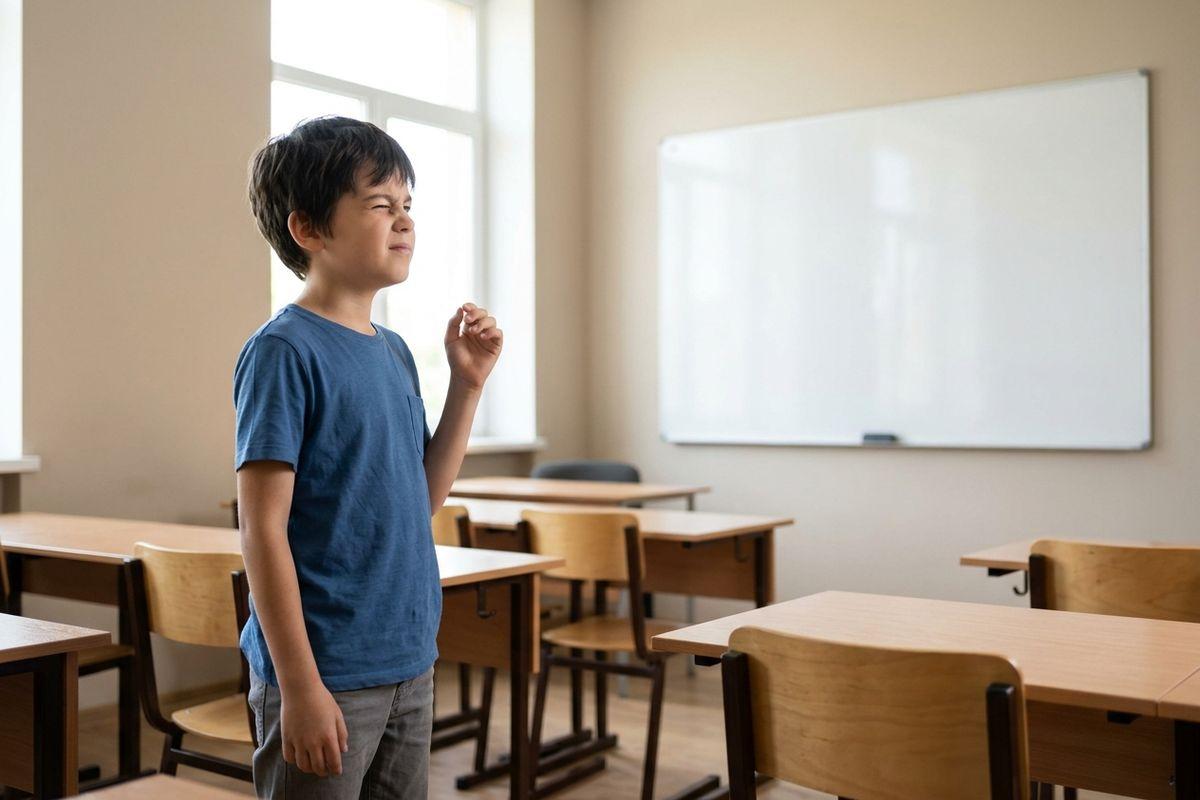
Kids may think everyone sees the way they do. If the whiteboard looks fuzzy, your child probably thinks it looks fuzzy to the whole class, so they may never bring it up.
Many vision problems don’t come with obvious signs, either. Your child can seem happy and active while 1 eye does less of the work.
Finding a problem early can give treatment a better chance of working. During an eye exam, your optometrist can look inside the eye, including the retina and optic nerve, which you can’t check from the outside.
Signs Your Child May Have a Vision Problem
The signs of a vision problem can look different depending on your child’s age.
Signs in Babies and Toddlers
Watch for a few of these signs in your baby or toddler:
- Their eyes still look crossed after 6 months old.
- 1 eye turns in, out, up, or down.
- They hold toys very close to their face.
- They cover or close 1 eye.
Signs in School-Age Kids
Older kids often show vision trouble through their habits. You may notice that your child:
- Squints at the board or a screen.
- Rubs their eyes often.
- Complains about headaches.
- Mentions blurry vision.
- Tilts or turns their head to see something.
If you notice any of these signs, book an eye exam, even if your child’s last visit wasn’t long ago.
What Happens During Your Child’s Eye Exam
Your optometrist looks at a few key areas during the visit:
- The overall health of your child’s eyes.
- How the eye muscles move.
- How well the eyes line up.
- How the eyes focus together as a team.
We explain each step as it happens, so you and your child know what to expect.
Treatment Options for Children’s Vision Problems
Your optometrist watches closely for 2 conditions in young children: strabismus and amblyopia. Strabismus means the eyes don’t line up with each other. Amblyopia, often called lazy eye, means 1 eye doesn’t see as clearly as the other.
If your optometrist finds a concern, your child’s plan may include:
- Glasses, which can help each eye focus more clearly.
- Contact lenses, which can suit kids who are ready to wear and care for them.
- Patching, which covers the stronger eye for part of the day so the weaker eye can get more practice.
- Vision therapy, which uses guided activities to help the eyes work together.
Lazy eye often responds well when treatment starts before age 8. Your optometrist can walk you through why each option fits your child and how to work it into your family’s routine.
Simple Habits to Protect Your Child’s Eyes
A few small habits at home can support your child’s eyes between visits:
- Aim for about 1 hour outdoors each day, which may help delay nearsightedness, or trouble seeing things far away.
- Encourage a screen break every 30 to 60 minutes.
- Switch off screens 1 hour before bedtime.
An after-school walk to the park or a bike ride counts toward outdoor time. It also gives your child’s eyes a rest from the tablet.
Book Your Child’s First Eye Exam
Your child’s first eye exam gives you a starting point, and each visit after it can help you spot changes as they grow.
At EyeCare Niagara, we take time to answer your questions, whether it’s your child’s first visit or they’re heading into high school. If your child needs glasses, we’ll help you choose a pair that fits their daily routine.
Book your child’s eye exam today, and we’ll help you plan the visits that come next.