


Plenty of people hear the word “astigmatism” for the first time after an eye exam. It’s a common diagnosis, and it often comes up during a routine adult eye exam when someone mentions that signs or screens have started to look a little fuzzy.
Astigmatism is a common vision condition where the front of your eye has an uneven curve, which can make things look blurry or distorted at any distance. Once your optometrist finds it, they can help you choose glasses or contacts that suit your prescription and the way you spend your day.
How Astigmatism Affects Your Vision
Your cornea is the clear, dome-shaped surface at the front of your eye. In many eyes, it’s curved evenly, like a basketball. With astigmatism, it’s curved more like a football, so it bends incoming light unevenly instead of focusing it on 1 point at the back of your eye.
That uneven focus is why letters and lines can look stretched or smudged. Less often, the curve of the lens inside your eye causes astigmatism instead of the cornea.
Astigmatism is a refractive error, which means it affects how your eye focuses light. Your eye isn’t sick or damaged. It often appears alongside nearsightedness, where faraway objects look blurry, or farsightedness, where close objects are harder to see. A single prescription can correct both.
Common Signs and Symptoms of Astigmatism
Mild astigmatism can go unnoticed for years, and about 1 in 3 people has some degree of it. When it does cause problems, watch for a few of these:
- Blurry or distorted vision, whether you’re reading a menu or looking across a parking lot
- Eyes that feel strained after reading or time on a screen
- Headaches during or after focused tasks
- More trouble seeing at night than you used to have
- Squinting to bring things into focus
Bring up any signs that keep coming back or get worse at your next comprehensive eye exam. Your optometrist can look for the cause and check your overall eye health at the same visit.
What Causes Astigmatism?
Many people are born with astigmatism, and it often runs in families. Other factors can change the shape of your cornea later in life:
- An eye injury
- Past eye surgery
- Scarring on the cornea after an infection
- Keratoconus, a condition where the cornea slowly thins and bulges outward
You may have grown up hearing that reading in dim light or sitting close to the TV would ruin your eyes. Neither habit causes astigmatism.
Squinting won’t cause it or make it worse, either. If you squint often, though, let your optometrist know, since it may mean your current prescription needs an update.
How Optometrists Check for Astigmatism
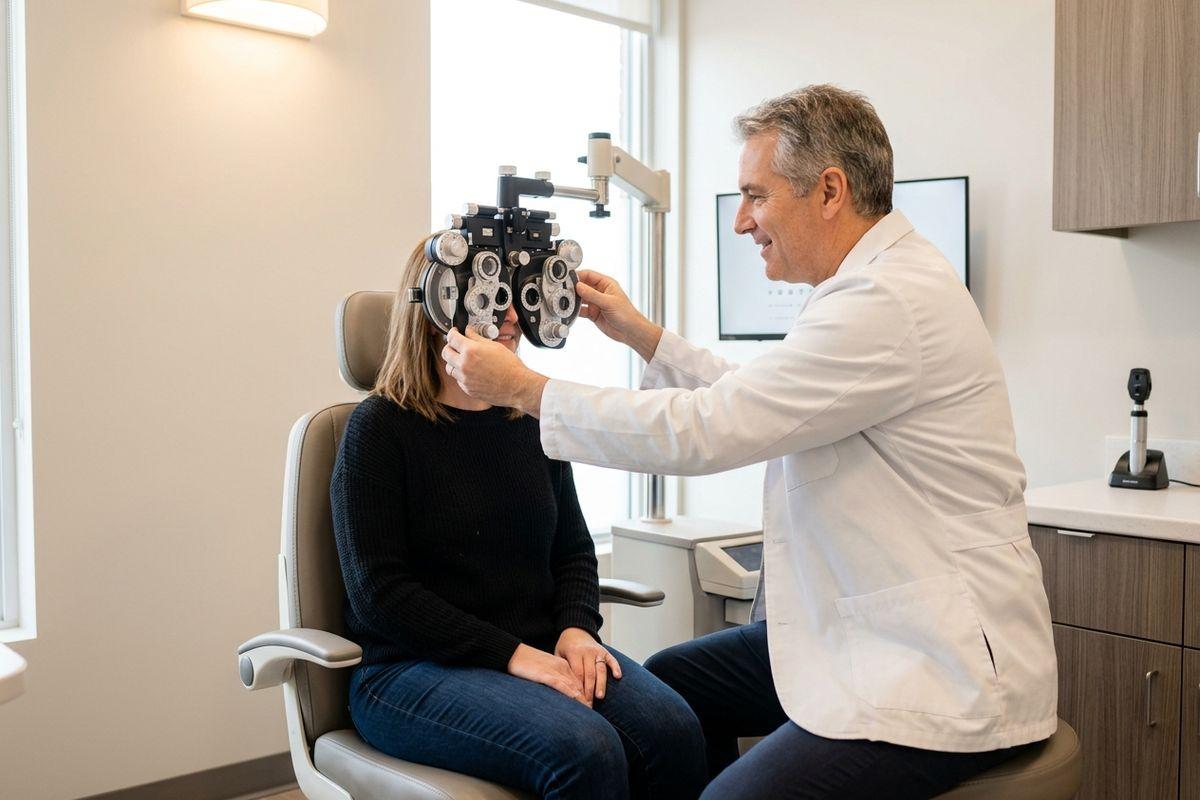
You don’t need a special appointment. Your optometrist checks for astigmatism during a thorough eye exam, using the same tests that measure nearsightedness and farsightedness.
Those measurements tell your optometrist how much astigmatism you have and at what angle it sits on your eye. Both details go into your lens prescription.
A small amount of astigmatism may not need correction right away. It can change over time, and the changes are often so gradual that you may not notice them. Keep up with regular checkups so your optometrist can compare results from visit to visit and update your lenses when needed.
Treatment Options for Astigmatism
Most people with astigmatism wear glasses or contacts, though other options exist. Your optometrist can walk you through what fits your eyes and your routine.
Glasses
Properly prescribed and fitted glasses can give you clear vision for reading and driving. Astigmatism lenses are made to align with a specific angle of your eye, so choose a frame that sits comfortably and stays in place.
How often you wear them depends on how much astigmatism you have. Some people wear glasses all day. Others only reach for them for night driving, long hours at a computer, or detailed work, and your optometrist can explain the reasoning behind their recommendation.
Contact Lenses
If you’d like a break from frames, ask about contact lenses. People with astigmatism often wear toric lenses, which are designed to stay aligned on the eye. Plenty of people keep glasses for desk days and wear contacts for golf or evenings out.
Like glasses, everyday contacts correct how light enters your eye while leaving your cornea’s shape unchanged.
Ortho-k works differently. You wear rigid lenses overnight that gently reshape your cornea while you sleep, so you may be able to go without glasses or contacts during the day. It may suit lower amounts of astigmatism, and your vision returns to its usual state if you stop wearing the lenses.
Laser Eye Surgery
Refractive surgery such as LASIK or photorefractive keratectomy (PRK) can permanently change the cornea’s shape. LASIK reshapes the tissue under a thin flap on the surface of your eye, while PRK works directly on the outer surface.
Not everyone is a candidate. Your prescription usually needs to be stable, and your cornea needs to be thick enough for the procedure, so talk with your optometrist about whether surgery fits your eyes and goals.
Get Your Astigmatism Checked in St. Catharines
Astigmatism is common, and glasses or contacts can often correct it. Start with an eye exam, so you know where your vision stands.
At EyeCare Niagara, we take time to learn about your work, your hobbies, and how you use your eyes before we recommend lenses. Book an appointment with our team and bring any questions you have about your prescription.