


Key Takeaways
- Prescription sunglasses combine UV protection with corrected vision for outdoor use.
- A current eye exam and valid prescription are the first steps.
- Lens options like polarized, progressive, or Transitions can match your lifestyle needs.
- Cost depends on frames, lens type, and add-ons.
- An optometrist in St. Catharines can guide you through the full process from exam to frame selection.
Sunglasses Can Also Bring Clear Vision
For many people with corrective lenses, stepping outside on a bright day means choosing between clear vision and the comfort of sunglasses. But you shouldn’t have to make that trade-off. Prescription sunglasses put your corrective lenses into sunglass frames, so you get both clear vision and UV protection at the same time.
At EyeCare Niagara, we can walk you through the process, from getting your comprehensive eye exam to finding the right frames for your lifestyle.
What Prescription Sunglasses Actually Are
Prescription sunglasses are regular sunglass frames fitted with lenses that match your vision correction. They work like your everyday glasses, but with added tint and UV protection for outdoor use. That means no more switching between sunglasses and prescription glasses when you’re outside.
Prescription sunglasses are available in the same lens formats you’d find with regular glasses, including single vision for near or for distances, as well as bifocal and progressive lenses for those who need correction at multiple distances. Whatever your prescription looks like, there’s likely an option that fits your needs.
Start with an Eye Exam & a Valid Prescription
Why a Current Prescription Matters
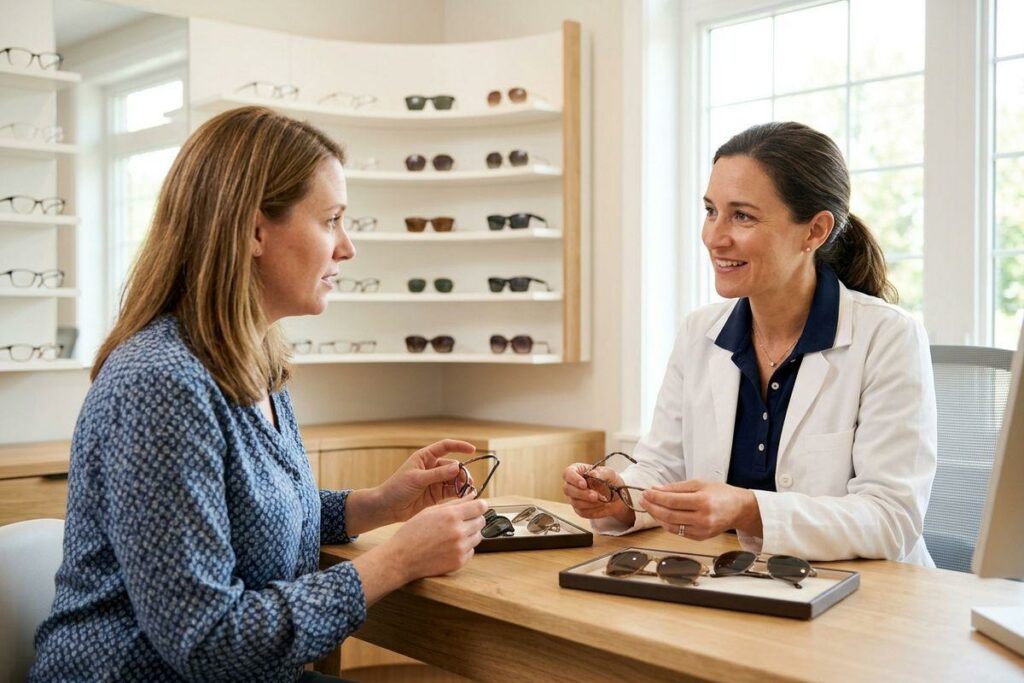
Before you pick out frames, you need an updated prescription. Most prescriptions are only valid for 1 to 2 years, so if it’s been a while since your last eye exam, updating your prescription is the right first step.
Eye exams give your optometrist a chance to check not only your prescription, but also the overall health of your eyes. In fact, comprehensive eye exams can detect over 270 health conditions, making them an important part of your health routine.
What Your Prescription Includes
Your prescription contains measurements that represent the vision correction you need. These include sphere, cylinder, and axis values. In order for your sunglasses to fit correctly, you’ll also need your pupillary distance (that is, how far apart your pupils are). This number affects how your lenses are centred, and getting it right makes a real difference in how clearly and comfortably you see.
Choosing the Right Lens Type for Your Lifestyle
Polarized vs. Standard Tinted Lenses
If you spend time near water, on the road, or around snow, polarized lenses are worth considering. Polarized lenses filter out the glare caused by reflected light. This makes activities like driving into the afternoon sun or fishing on a lake more comfortable.
Standard tinted lenses should offer UV protection and come in a range of colours and darkness levels. They’re a practical choice if glare isn’t a major concern.
Other Lens Options Worth Knowing About
Transitions darken automatically when exposed to sunlight, then become clear again when you go inside. This means that you only need one pair of glasses for both indoors and outdoors.
Anti-reflective coatings can improve clarity in bright conditions by reducing glare on the back surface of the lens. This is especially helpful when the sun is behind you or if you spend long hours in front of a screen.
How Much Do Prescription Sunglasses Cost?
The total cost of prescription sunglasses depends on several factors, including the frame you choose, the lens type, and any coatings or add-ons you select. Polarized lenses and progressive options tend to increase the price compared to basic single-vision tinted lenses.
It’s helpful to know your budget going in, while also considering what features you’ll actually use. Buying through your optometrist also comes with advantages beyond price, and there are good reasons to get your glasses directly from your optometrist rather than elsewhere.
If you have vision insurance, it may cover part of the overall cost.
Where to Get Prescription Sunglasses in St. Catharines
Through Your Optometrist
Your optometrist has the experience and background to ensure that your prescription works with your frames. Many practices also carry an in-office frame selection, so that you can try on options and get a feel for fit and style before committing to the perfect pair.
At EyeCare Niagara, we offer a wide range of stylish brands and frames, so that you can find a pair of sunglasses that meets the needs of both your prescription and your style. Reach out to our team to book your appointment!